

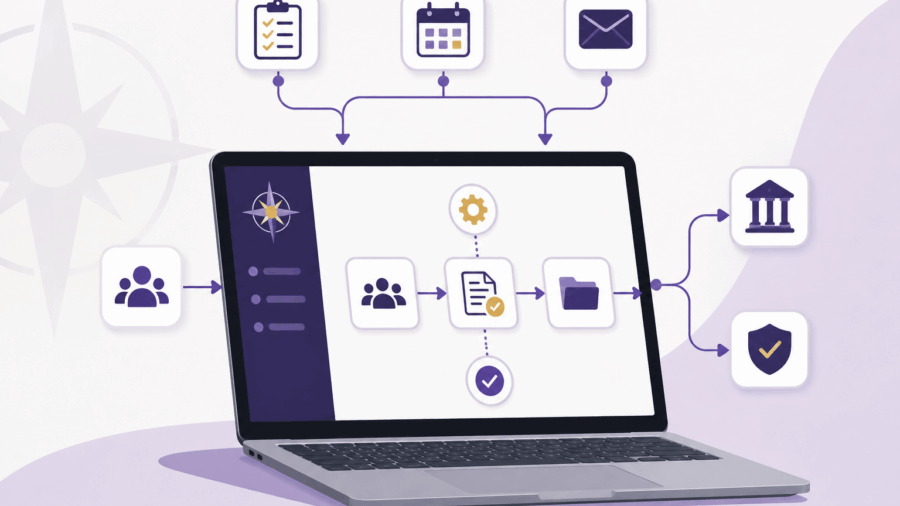
Conversion Optimization For Estate Planning Law Firms

Conversion Optimization for Estate Planning Law Firms: Where Revenue Is Actually Won

When considering conversation optimization for estate planning law firms, you must look beyond web traffic. Driving traffic to your estate planning law firm’s website is often treated as the primary objective of marketing, yet in practice it is only the beginning of the client acquisition process, and in many cases, not even the most important part.

Because traffic alone does not generate revenue.

What matters is what happens next.

If prospective clients arrive on your website after searching for terms such as “estate planning attorney near me” or “Medicaid planning lawyer,” and then leave without scheduling a consultation, requesting guidance, or taking a defined next step, the issue is not visibility, it is conversion.

And for most estate planning firms, this is precisely where the breakdown occurs.

The Estate Planning Sales Funnel: Where Firms Lose Momentum

To understand conversion properly, it is necessary to step back and view your marketing through the lens of a structured funnel, rather than isolated tactics.

At a high level, every prospective client moves through four stages:

  • Awareness — discovering your firm through search, referrals, or content
  • Consideration — evaluating whether you are the right fit
  • Decision — determining whether to engage with you
  • Conversion — taking action by booking a consultation or becoming a client

Most estate planning attorneys invest heavily in the awareness stage, focusing on SEO, referrals, and content creation, but far fewer firms give the same level of attention to the transition between consideration and decision.

This is where conversion optimization sits.

And this is where the majority of revenue is either captured—or lost.

Why Estate Planning Conversion Is Uniquely Complex

Unlike transactional services, estate planning requires a client to make a series of layered decisions, often involving long-term financial implications, family considerations, and a degree of emotional resistance tied to topics such as incapacity or mortality.

This means that when a prospective client lands on your website, they are not simply asking, “What services do you offer?”

They are asking:

  • “Can I trust this firm with something this important?”
  • “Do they understand my situation?”
  • “What happens if I move forward?”
  • “Is this the right time to act?”

If your website does not answer these questions clearly and confidently, the client does not move forward—not because they are not interested, but because they are not yet certain.

Your Website Is the Bridge Between Interest and Action

In this context, your website is not a digital brochure.

It is the most critical stage of your intake system.

It must guide a prospective client from passive interest to active decision-making, doing the work that would otherwise happen in a first consultation.

Firms that approach their websites this way begin to see a shift.

Instead of presenting information, they begin structuring an experience.

Instead of listing services, they begin guiding decisions.

The Role of Content in Conversion Rate Optimisation for Estate Planning Firms

Content plays a far more significant role in conversion than many attorneys realise, particularly in a field where trust, clarity, and understanding directly influence whether a client takes action.

When a prospective client arrives on your website, they are not simply scanning—they are evaluating.

They are looking for content that reflects their concerns, answers their questions, and demonstrates that your firm has both the expertise and the structure to guide them effectively.

This is where content becomes a conversion tool, not just an educational one.

High-performing estate planning firms use content to:

  • Clarify complex decisions in plain, client-focused language
  • Address common concerns before they are raised in consultation
  • Reinforce authority through consistent, relevant publishing
  • Create alignment between what the client reads and what they will experience

This often includes the strategic use of:

  • Dedicated landing pages tailored to specific services such as Medicaid planning, asset protection, or trust administration, ensuring that each visitor is met with highly relevant messaging rather than generic information
  • Well-structured FAQs, which address the exact questions clients are already thinking about, reducing uncertainty and increasing confidence
  • Regularly updated content, including blogs, guides, and practical insights, which signal both authority and relevance in an evolving legal landscape

When done correctly, content does not simply inform.

It removes hesitation.

Where Conversion Breaks Down in Estate Planning Websites

In most firms, conversion issues are not caused by a single failure, but by a series of small inefficiencies that accumulate.

A website may present valuable information, but fail to provide a clear next step.

A call-to-action may exist, but lack specificity, leaving the client uncertain about what they are committing to.

Trust signals may be present, but not positioned where they are needed most—at the point of decision.

And the intake process may function operationally, but not strategically, resulting in delayed responses or inconsistent follow-up.

Each of these moments introduces friction.

And in a decision process that already carries weight, friction is often enough to stop momentum entirely.

Conversion Optimization as Friction Reduction

At its core, conversion optimization is not about persuasion.

It is about reducing resistance.

That means making it easier for a prospective client to:

  • Understand what you do
  • Trust how you do it
  • And take the next step without hesitation

This requires intentional design across multiple areas.

A website structure that presents clear pathways to book a consultation ensures that users are never left wondering what to do next.

Calls-to-action that are specific and outcome-driven—such as “Book Your Estate Planning Session”—create clarity around what action involves, rather than relying on vague prompts like “Contact Us.”

Trust signals, including reviews, testimonials, credentials, and clearly explained processes, must be visible at the exact moment a client is deciding whether to move forward.

And the intake process must be structured, responsive, and consistent, recognising that conversion does not happen in a single interaction, but often across multiple touchpoints.

The Overlooked Power of Intake and Follow-Up

One of the most significant gaps in estate planning conversion is what happens after a prospective client expresses interest.

Research consistently shows that multiple interactions are often required before a decision is made, which means that follow-up is not simply a courtesy—it is a critical component of conversion.

Firms that rely on inconsistent or delayed responses inevitably lose opportunities to competitors who respond more quickly and with greater clarity.

By contrast, firms that systemize intake and follow-up—ensuring timely communication, clear next steps, and consistent messaging—are able to convert a significantly higher percentage of the same volume of leads.

This is not a marketing advantage.

It is an operational one.

A Practical Conversion Checklist for Estate Planning Attorneys

For firms looking to assess whether their website is truly conversion-ready, the following considerations provide a useful starting point:

  • Does your website load quickly and function seamlessly across mobile devices, recognising that a growing proportion of clients will first encounter your firm on a phone rather than a desktop?
  • Are your calls-to-action clear, specific, and consistently positioned throughout your site, guiding users toward a defined next step rather than leaving them to navigate independently?
  • Are your forms simple and efficient, requesting only the information necessary to initiate a conversation, rather than overwhelming the user at the point of decision?
  • Is your content written with your client in mind, addressing real concerns, scenarios, and decision points, rather than focusing solely on legal explanations?
  • Are you actively using analytics to understand where users drop off, how they behave, and what pathways lead to conversion?
  • Have you implemented structured testing—whether through A/B testing or iterative improvements—to refine your messaging, layout, and user experience over time?

Each of these elements contributes to a broader system.

And it is the system, rather than any individual tactic, that ultimately determines performance.

From Traffic to Clients: A Shift in Perspective

What becomes clear when viewing conversion through this lens is that most estate planning firms are not lacking opportunity.

They are under-leveraging it.

The traffic they are generating, the referrals they are receiving, and the interest they are attracting already represent significant potential.

The question is whether that potential is being guided effectively through the funnel.

When your website functions as a structured pre-consultation experience, when your content aligns with how clients think and decide, and when your intake process supports rather than interrupts that journey, conversion improves—not incrementally, but meaningfully.

Conversion Optimization in Estate Planning Marketing 

Conversion optimization is often framed as a technical discipline, focused on incremental adjustments to pages, forms, and design elements.

In reality, it is a reflection of how well your firm understands the client journey.

It requires a shift from thinking about marketing as a way to generate attention, to thinking about it as a way to guide decisions.

Because in estate planning, the firms that grow are not those that attract the most traffic.

They are the ones that make it easiest for the right clients to say yes.

The Annual Marketing Plan (AMP) by Lawyers With Purpose was designed to solve exactly this problem.

Rather than approaching marketing as a collection of isolated tactics, AMP provides a structured, strategic framework that aligns:

  • Your content with how clients actually make decisions
  • Your website with a clear conversion pathway
  • Your messaging with your consultation and enrollment process
  • Your marketing efforts with measurable growth targets

It removes the need to constantly ask, “What should we be doing next?”

And replaces it with a plan that is already built, tested, and aligned with how estate planning firms grow.

For attorneys who are ready to move beyond sporadic marketing efforts and begin building a practice where demand, conversion, and revenue are all working together, AMP is the next step to consider.

Because at this stage, growth is no longer about doing more.

It is about doing the right things, in the right order, with the right structure behind them.

About the Author

Saima Omar is a content marketing strategist and SEO copywriter who helps professional service firms turn content into a consistent source of growth.

A trained journalist with a Master’s in Journalism, Saima brings over a decade of experience working across content, SEO, and brand strategy, partnering with more than 100 businesses globally, from fintech and SaaS to legal and professional services.

Her work sits at the intersection of strategy and execution. Rather than producing content for visibility alone, she focuses on building systems that educate, position, and convert, helping firms move prospects through the sales funnel with clarity and intent.

Saima has worked closely with estate planning and legal organizations, including Lawyers With Purpose, where she supports content, messaging, and marketing strategy designed to help attorneys grow more structured, scalable practices.

What Makes Lawyers With Purpose Unique For Estate Planning Attorney Practice Growth

What Makes Lawyers With Purpose Unique? A Complete System for Estate Planning Attorneys Who Want to Scale

Most estate planning attorneys don’t struggle with legal expertise. They struggle with everything around it. Running a firm, managing a team, keeping revenue consistent, handling operations, and trying to grow, all while still serving clients at a high level.

And the truth is simple:

Law school didn’t teach you how to run a business.

It taught you how to practice law. That gap is where most firms get stuck.This is exactly where Lawyers With Purpose (LWP) operates differently.

What Makes Lawyers With Purpose Different?

At its core, Lawyers With Purpose is not just software, training, or community.

It is a complete operating system for estate planning law firms—designed to help attorneys move from being overwhelmed practitioners to confident business owners.

Instead of piecing together tools, strategies, and guesswork, LWP provides a structured, proven framework that connects:

  • Drafting
  • Workflows
  • Marketing
  • Financial performance
  • Leadership

All in one place.

Why Most Estate Planning Firms Hit a Ceiling

Before understanding what makes LWP unique, it’s important to recognise why so many firms plateau.

Most attorneys find themselves:

  • Buried in administrative work
  • Wearing too many roles (attorney, manager, marketer, operator)
  • Lacking clear systems for growth
  • Reacting to revenue instead of controlling it
  • Unsure how to scale without increasing workload

This isn’t a capability issue.

It’s a systems issue.

Without infrastructure, growth creates more complexity—not more freedom.

A Complete Operating System for Your Law Firm

Lawyers With Purpose solves this by providing an integrated system that supports both legal work and business operations.

1. STEPS™ Drafting Software + iPug® Planning Tools

At the foundation is LWP’s proprietary drafting and planning system.

This includes:

  • Industry-exclusive trusts, including the iPug® Protection Trust
  • Wills, Medicaid planning, VA planning, and crisis planning tools
  • Single-interview templates that streamline client intake
  • Real-time updates to reflect legal and regulatory changes

Why this matters:

Instead of reinventing documents or relying on fragmented systems, attorneys can deliver consistent, high-quality work efficiently—without sacrificing customization.

2. Automated Workflows + KPI Tracking

LWP extends beyond drafting into full operational execution.

Attorneys gain access to:

  • Step-by-step workflows for estate planning, Medicaid applications, funding, probate, and trust administration
  • Integrated task management across teams
  • KPI tracking to measure performance at every stage

Why this matters:

Most firms operate reactively. LWP introduces predictability—so nothing falls through the cracks, and performance becomes measurable.

3. Business Reporting + Performance Dashboards

Growth requires visibility.

LWP provides plug-and-play reporting tools that allow firms to track:

  • Revenue trends
  • Team productivity
  • Marketing performance
  • Financial health

Why this matters:

Instead of guessing what’s working, attorneys can make informed decisions based on real data—quickly identifying bottlenecks and opportunities.

The LWP Growth System: A Proven 5-Step Framework

What truly sets LWP apart is not just the tools, but the structured methodology behind them.

Every member follows a defined path designed to create sustainable growth.

1. Assessment

It starts with a full diagnostic of your firm.

This includes:

  • Processes
  • Pricing
  • Marketing
  • Team structure
  • Mindset and leadership approach

Outcome: Clear identification of gaps and opportunities.

2. Strategy

Based on your assessment, you receive a custom 12-month plan covering:

  • Operations
  • Marketing
  • Revenue growth
  • Leadership development

Outcome: A roadmap tailored to your firm—not a generic template.

3. Performance

Execution is supported through:

  • Monthly coaching and strategy calls
  • Ongoing benchmarks and tracking
  • Personalized guidance

Outcome: Consistent progress toward measurable goals.

4. Community

You’re not building your firm in isolation.

LWP provides access to:

Outcome: Shared knowledge, faster learning, and real-world insights.

5. Accountability

Growth requires discipline.

LWP ensures this through:

  • Weekly marketing and sales tracking
  • Budget dashboards
  • Quarterly one-on-one check-ins

Outcome: Clear visibility and course correction before problems escalate.

Built by Estate Planning Attorneys—Not Theorists

One of the most important distinctions is this:

Everything inside LWP is built from real-world application.

These systems are not theoretical frameworks.

They are based on:

  • Actual estate planning firms
  • Proven workflows used in practice
  • Strategies tested across hundreds of attorneys

When laws change, LWP adapts quickly.
When strategies work, they are systemized.
When challenges arise, solutions already exist.

This shortens the learning curve significantly.

A Track Record of Industry Innovation

Lawyers With Purpose has consistently led innovation in estate planning systems.

Key milestones include:

  • 1995: iPug® Protection Trust development
  • 2001: Medicaid Practice System
  • 2007: Intelligent single-interview planning design
  • 2008: Law firm operational workflows
  • 2013: Fully integrated cloud-based drafting and systems
  • 2020: SECURE Act IRA trust solutions (SORT™, Rothalike™, and more)

This history reflects a consistent focus on solving real challenges faced by estate planning attorneys.

More Than Software—A System for Growth

Many solutions in the legal industry focus on one piece of the puzzle:

LWP connects all of them.

Because growth doesn’t come from isolated improvements.

It comes from alignment across:

  • Legal work
  • Operations
  • Marketing
  • Financial strategy

Who Lawyers With Purpose Is Designed For

LWP is built for estate planning and elder law attorneys who:

  • Want to scale without increasing chaos
  • Are ready to move from practitioner to business owner
  • Need systems that support growth—not limit it
  • Value structure, accountability, and proven processes
  • Want to build a firm that is both profitable and sustainable

Finding the Right Level of Support for Your Firm

Not every estate planning attorney is in the same place.

Some are looking for better drafting tools. Others are trying to fix inconsistent revenue. Many are somewhere in between—running a busy practice that works, but not as efficiently, predictably, or profitably as it should.

That’s why Lawyers With Purpose is not structured as a one-size-fits-all solution.

Instead, it’s built as a progression—allowing you to enter at the level that makes sense for your firm today, and expand as your needs evolve.

For some attorneys, that starts with software.

They need a more reliable, integrated way to draft, manage client workflows, and reduce time spent on repetitive processes. A software-focused membership provides access to STEPS™ and the underlying systems that bring consistency and efficiency to day-to-day operations.

For others, the immediate challenge is not production—it’s visibility and client acquisition.

That’s where a marketing-focused membership comes in. With structured campaigns, messaging guidance, and proven frameworks, firms begin to move away from sporadic outreach and toward a more consistent, intentional flow of new prospects.

Then there are firms that are ready for something more comprehensive.

The Profit & Growth level is designed for attorneys who want to connect the dots between operations, marketing, and financial performance. It introduces a more strategic approach—aligning how the firm runs with how it grows, and ensuring that both are moving in the same direction.

Beyond that sits E-Freedom.

This is where the shift becomes more profound. It’s no longer just about improving the firm—it’s about redesigning how the firm operates so it is no longer dependent on the attorney for everything. Systems, leadership, and accountability come together in a way that allows the business to scale without increasing chaos.

What matters most is not which level you choose.

It’s choosing the right starting point.

That’s why every journey with Lawyers With Purpose begins with a Law Firm Assessment.

This is not a surface-level review. It’s a structured evaluation of your current operations, revenue model, team dynamics, and growth constraints—designed to identify exactly where your opportunities are and what needs to change to move forward.

From there, the right membership becomes clear.

And the results speak for themselves.

We’ve seen firms move from unpredictability to consistency. From overworked to structured. From plateaued to scaling past $1 million in annual revenue—and beyond.

Not through guesswork.

Through systems, strategy, and the right level of support at the right time.

Join LWP here

Frequently Asked Questions about Lawyers With Purpose

What is Lawyers With Purpose?

Lawyers With Purpose is a membership-based platform that provides estate planning attorneys with integrated software, workflows, business strategy, and community support to help them grow and manage their law firms more effectively.


How is LWP different from other legal software?

Unlike standalone legal tools, LWP combines drafting software, operational workflows, KPI tracking, business reporting, and coaching into one complete system designed specifically for estate planning attorneys.


Does LWP help with law firm growth?

Yes. LWP provides a structured 5-step growth system that includes assessment, strategy, performance tracking, community support, and accountability to help firms scale predictably.


Who should use Lawyers With Purpose?

Estate planning and elder law attorneys who want to improve efficiency, increase revenue, and build a more structured, scalable practice.

Ready to Run Your Estate Planning Practice Like a Business?

You don’t need another disconnected tool. You need a system that brings everything together.

Lawyers With Purpose gives you:

  • The infrastructure to scale
  • The clarity to make decisions
  • The support to execute consistently

If you’re ready to move beyond day-to-day chaos and start building a firm that works for you.

Book your free Law Firm Assessment today.

Start with a clear plan. Build a better practice. 

when should you start medicaid planning

When Should Clients Start Medicaid Planning? The Timing Most Families Get Wrong

For many estate planning attorneys, Medicaid planning first enters the conversation when a client arrives in crisis.

A parent has already entered a nursing facility. The family is watching savings disappear quickly. Someone asks whether Medicaid might help cover the cost of care.

At that point, the question becomes urgent:

“Is it too late to do anything?”

But the more important question, one attorneys should be asking much earlier, is this:

When should clients start Medicaid planning?

The answer has significant implications for both clients and the attorneys advising them. Timing can determine whether meaningful asset protection strategies are available or whether families are forced into reactive spend-down decisions.

Understanding the Medicaid planning timeline allows estate planning attorneys to guide clients more proactively and integrate long-term care planning into their broader estate planning strategy.

The Biggest Medicaid Myth: Waiting Until Long-Term Care Is Needed

One of the most persistent misconceptions about Medicaid planning is that it only becomes relevant once a client needs nursing home care.

Many clients assume planning begins when:

  • A parent enters assisted living or a nursing facility
  • long-term care bills begin to accumulate
  • savings begin to decline rapidly

By the time these events occur, however, many of the most effective planning strategies may no longer be available.

For attorneys, this is where education becomes critical. Medicaid planning should not be viewed as a last-minute solution—it should be introduced as part of a broader estate planning conversation.

When attorneys begin these discussions earlier, clients gain access to more strategic options and avoid the costly mistakes that often occur when families attempt to navigate Medicaid rules on their own.

Many of these mistakes are explored in Top 5 Medicaid Planning Mistakes Attorneys Should Help Clients Avoid.

Understanding the Medicaid Planning Timeline

A useful way for attorneys to approach Medicaid planning is by viewing it as a timeline rather than a single event.

Each stage presents different opportunities and limitations.

Early Planning (More Than Five Years Before Care Is Needed)

This stage provides the greatest flexibility for asset protection and long-term planning.

When Medicaid planning begins early, attorneys can implement strategies that may include:

  • Medicaid asset protection trusts
  • strategic gifting programs
  • asset repositioning
  • coordination between estate plans and long-term care planning

Because these strategies occur outside the Medicaid look-back window, clients may have greater ability to preserve assets while preparing for potential long-term care needs.

Early planning also allows attorneys to guide clients thoughtfully rather than under the pressure of an immediate care decision.

Pre-Crisis Planning (Within the Five-Year Window)

Planning becomes more complex once clients enter the Medicaid look-back period.

Transfers or gifts made during this period may trigger eligibility penalties, limiting certain strategies.

However, experienced attorneys can still help clients navigate the situation through:

  • strategic asset repositioning
  • income planning strategies
  • partial spend-down planning
  • long-term care eligibility analysis

Although the planning window is narrower, attorneys who understand the rules can still provide meaningful guidance.

Crisis Planning (Care Is Needed Immediately)

In many cases, families approach attorneys only after a loved one has already entered a care facility.

This is often referred to as crisis Medicaid planning.

While the planning options may be more limited, attorneys can still help clients explore strategies such as:

  • Medicaid spend-down planning
  • converting countable assets into exempt assets
  • protecting assets for a healthy spouse
  • structuring caregiver compensation agreements

However, these strategies must be implemented carefully and in compliance with Medicaid eligibility rules.

This reality highlights why early planning conversations are so important.

The Five-Year Look-Back Rule Explained

One of the most important concepts attorneys must help clients understand is the Medicaid five-year look-back period.

When an individual applies for Medicaid to cover long-term care costs, the program reviews financial transactions made during the previous five years.

If Medicaid determines that assets were transferred below fair market value during that time, it may impose a penalty period during which the applicant is ineligible for benefits.

This rule is intended to prevent individuals from transferring assets immediately before applying for Medicaid.

For attorneys, this rule underscores the importance of educating clients early.

Well-intentioned actions—such as gifting money to children or transferring property without legal guidance—can later create eligibility problems.

Understanding the five year look back medicaid rule allows attorneys to help clients avoid these pitfalls.

Early Planning vs Crisis Planning

For estate planning attorneys, the difference between medicaid planning early vs crisis planning is significant.

Early Planning

Early Medicaid planning provides attorneys with the greatest flexibility.

Benefits include:

  • more asset protection strategies
  • reduced eligibility risk
  • lower stress for families
  • better coordination with estate planning goals

Crisis Planning

When clients wait until long-term care becomes necessary, planning becomes more reactive.

Attorneys may face:

  • limited planning strategies
  • urgent financial decisions
  • heightened emotional pressure for families
  • increased compliance risk

While crisis planning can still help clients navigate eligibility requirements, the planning environment is far less flexible.

Why Estate Planning Attorneys Should Introduce Medicaid Planning Earlier

Many estate planning attorneys focus primarily on wills, trusts, and tax strategies.

However, long-term care costs have become one of the most significant financial risks facing clients.

Introducing Medicaid planning earlier allows attorneys to:

  • strengthen their advisory role
  • provide more comprehensive planning services
  • protect client assets more effectively
  • build deeper client relationships

As discussed in How Medicaid Planning Can Increase Revenue and Help More Clients, integrating Medicaid planning into an estate planning practice can also create new opportunities for serving clients while strengthening firm growth.

For attorneys, the key is shifting Medicaid planning from a reactive service to a proactive planning strategy.

You can explore this broader approach in our guide to Medicaid planning for estate planning attorneys, which explains how integrating Medicaid strategies into estate planning practices is becoming increasingly important.

Helping Attorneys Structure Early Medicaid Conversations

Many attorneys recognize the importance of Medicaid planning but are unsure how to introduce the topic during client consultations.

Simple questions can help start the conversation:

  • “Have you considered how long-term care costs might affect your estate plan?”
  • “Do you have a strategy in place if extended care becomes necessary?”
  • “Would you like to explore options for protecting assets from future care expenses?”

These discussions help clients understand that Medicaid planning is not simply about eligibility—it is about protecting their financial future.

How Lawyers With Purpose Supports Medicaid Planning Attorneys

For attorneys who want to integrate Medicaid planning into their practices, having the right systems and tools is essential.

Lawyers With Purpose provides education, workflows, and technology that help attorneys implement Medicaid planning strategies efficiently.

Through LWP’s training programs and the STEPS® platform, attorneys gain access to:

  • structured Medicaid planning workflows
  • eligibility calculations
  • strategic planning frameworks
  • ongoing legal education and support

These resources allow attorneys to incorporate Medicaid planning into their practices in a way that benefits both clients and the firm.

So, when should clients start Medicaid planning?

Earlier than most families think.

When estate planning attorneys introduce Medicaid planning proactively—rather than waiting for a crisis—clients gain more options, more protection, and more peace of mind.

For attorneys, early planning conversations also create opportunities to provide deeper guidance and deliver greater value to the families they serve.


Medicaid Planning FAQs

When should you start Medicaid planning?

The best time to start Medicaid planning is several years before long-term care is needed. Starting early allows estate planning attorneys to implement strategies that protect assets while ensuring future eligibility for Medicaid benefits.


What is the Medicaid five-year look-back rule?

The Medicaid five-year look-back rule reviews financial transactions made in the five years before a Medicaid application. If assets were transferred below fair market value during this period, the applicant may face a penalty period that delays eligibility.


Can Medicaid planning still be done in a crisis?

Yes, crisis Medicaid planning may still be possible when a client already needs long-term care. However, the planning options are usually more limited than in early planning situations.


What is the Medicaid planning timeline?

The Medicaid planning timeline generally includes three stages: early planning (more than five years before care is needed), pre-crisis planning (within the look-back window), and crisis planning (when care is already required).

👉 Want to see how LWP’s STEPS™ software helps attorneys streamline Medicaid planning and protect more assets? Schedule a discovery call with our team today.

blog (24)

Estate Planning Software vs Generic Software

Wondering whether to get estate planning specific software or generic? This article will help you decide which is right for you. Many law firms begin their technology journey by adopting general legal software that promises efficiency through document automation and workflow support. At first glance, these platforms appear sufficient. They allow firms to draft documents, manage files, and organize client data. However, estate planning is not a generic legal discipline.

It requires strategic coordination between drafting, asset protection planning, Medicaid eligibility considerations, and long term client lifecycle management. This is where the distinction between generic legal software and purpose built estate planning software becomes significant.

The Limits of Generic Legal Software

Generic legal platforms are designed to support a broad range of legal services. Their strength lies in versatility rather than specialization. While they may assist with drafting standard documents, they typically do not incorporate:

As a result, firms often rely on external spreadsheets, manual calculations, or fragmented workflows when managing complex estate planning matters. This separation introduces inefficiencies and increases the likelihood of inconsistency.

Estate Planning Requires Strategic Integration

Modern estate planning increasingly overlaps with long term care planning and asset protection. Long term care costs continue to rise, and Medicaid now covers a significant portion of long term services and supports.

Many clients mistakenly assume Medicare will meet these needs, which places Medicaid planning at the center of future planning demand. Pasted text

Firms that integrate Medicaid planning into their core services are often able to:

  • Capture more complex cases
  • Generate recurring fees
  • Strengthen long term client relationships Pasted text

Generic legal software rarely supports this integration.

Purpose built estate planning systems such as STEPS™ are designed to embed Medicaid planning within the firm’s operational workflow.

The Role of Automation in Planning Accuracy

Estate planning frequently involves calculations related to eligibility, penalty periods, and asset protection strategies. When these calculations are performed manually, they require additional time and introduce risk. Using integrated tools allows firms to input client data once and generate:

  • Eligibility projections
  • Asset protection scenarios
  • Draft documents aligned with planning strategy Pasted text

This reduces reliance on ad hoc spreadsheets and supports consistency across cases.

Supporting Recurring Revenue and Client Retention

Generic legal software is often structured around transactional work. Estate planning, particularly when combined with Medicaid planning, creates opportunities for ongoing engagement.

For example, Medicaid planning may involve:

  • Annual eligibility reviews
  • Trust updates
  • Adjustments due to regulatory changes Pasted text

This transforms the client relationship from a one time transaction into a continuing advisory role.

Firms that adopt structured planning systems often find that a single client relationship can generate value over multiple years.

Workflow Alignment and Efficiency

Purpose built estate planning software supports a unified client lifecycle. This includes intake, planning, drafting, and ongoing monitoring. Generic platforms typically treat these stages as separate tasks.

Integrated systems allow firms to:

  • Track eligibility timelines
  • Monitor trust funding milestones
  • Automates follow up reminders Pasted text

Over time, this reduces marginal time per case and allows attorneys to handle greater volume without sacrificing quality. Estate Planning Firms that develop repeatable workflows for Medicaid planning often experience improved profit margins due to increased efficiency. Pasted text

Risk Mitigation and Compliance

Estate planning involves regulatory responsibilities that extend beyond document creation. Medicaid planning requires adherence to eligibility rules and documentation standards. Purpose built software can support compliance through:

  • Built in calculation logic
  • Audit trails
  • Updated rules delivered through the platform Pasted text

Generic software rarely incorporates these safeguards.

Scaling Through Systems For Estate Planning Law Firms

Adding Medicaid planning does not need to introduce complexity when supported by appropriate systems. Firms that embed planning into their technology infrastructure are able to:

  • Standardize intake
  • Maintain quality control
  • Delegate workflow tasks

This structured approach supports growth while maintaining consistency.

Turning Planning Needs into Estate Planning Practice Growth

As demand for long term care planning increases, estate planning firms face both an obligation and an opportunity. Purpose built estate planning software allows firms to:

  • Reduce administrative burden
  • Improve planning accuracy
  • Build predictable revenue streams Pasted text

Generic legal software, while useful for general practice management, often lacks the specialized functionality required to support this evolution.

Estate Planning Software vs Generic Legal Software

The distinction between estate planning software and generic legal software lies in specialization. Generic law firm tools support drafting. Estate planning software supports planning.

By integrating Medicaid eligibility calculations, asset protection strategies, and lifecycle workflows, purpose built platforms enable firms to move beyond transactional work and toward sustained client relationships.

For practices seeking efficiency, compliance, and long term growth, adopting estate planning specific software represents a meaningful step toward aligning legal expertise with operational capability.

Estate Planning Software vs Generic Legal Software FAQs

What is the difference between estate planning software and generic legal software?

Estate planning software supports Medicaid planning, asset protection, and lifecycle workflows, while generic software focuses mainly on document drafting.


Why is Medicaid planning important in estate planning software?

Medicaid planning allows firms to support long term care strategies and build recurring client relationships. Pasted text


Can estate planning software improve profitability?

Firms using structured planning systems often see efficiency gains that support higher margins over time. Pasted text


Does generic legal software support asset protection planning?

Generic software may support drafting but typically does not include planning logic or eligibility calculations.

Learn more

Medicaid Planning for Estate Planning Attorneys

Medicaid Planning for Estate Planning Attorneys: Why It Belongs in Your Practice

Medicaid Planning for Estate Planning Attorneys: For many estate planning attorneys, Medicaid planning still sits on the edge of their practice, something they handle occasionally or refer out. But the reality is that Medicaid planning is no longer optional in modern estate planning.

Long-term care costs continue to rise. Families are increasingly unprepared. And legislative changes are constantly reshaping eligibility rules and funding structures.

For attorneys, this creates both a responsibility and an opportunity.

When handled correctly, Medicaid planning allows attorneys to protect families from financial devastation while building a deeper, more sustainable practice. Lawyers With Purpose (LWP) has long advocated for integrating Medicaid qualification strategies into estate planning firms, not as a niche service, but as a core offering.

Let’s explore why.

The Growing Need for Medicaid Planning

The cost of long-term care is one of the biggest financial threats facing American families. Nursing home care, assisted living, and in-home support can cost thousands of dollars per month, quickly draining a lifetime of savings.

For many families, Medicaid is the only realistic way to pay for extended care.

Medicaid is a joint federal and state program designed to help individuals with limited income and assets access healthcare services, including long-term care. However, qualifying for benefits is far from straightforward. Eligibility depends on strict financial requirements, including income and asset limits that vary by state.

Without careful planning, families may be forced to spend down their assets before qualifying, leaving little for spouses or heirs.

This is where skilled estate planning attorneys make an enormous difference.

Medicaid planning helps families legally structure their finances, through strategies such as trusts, spend-down planning, or asset conversion, to meet eligibility requirements while preserving as much of the estate as possible.

For attorneys, helping clients navigate these rules is not only valuable, it is increasingly essential.

The Gap in Traditional Estate Planning

Many estate plans address wills, trusts, and tax strategies, but overlook the financial impact of long-term care.

That gap often becomes painfully clear when a health crisis strikes.

Families may come to an attorney after:

  • A parent enters a nursing facility
  • Savings begin disappearing quickly
  • Medicaid eligibility becomes urgent
  • Previous asset transfers trigger penalties

In these moments, attorneys are asked questions like:

  • “How do we qualify for Medicaid without losing everything?”
  • “What happens to the family home?”
  • “Can we protect assets for the healthy spouse?”

Without Medicaid expertise, the attorney may have limited answers.

This is why more estate planning practices are expanding their services to include Medicaid qualification and asset protection strategies.

In fact, many firms are discovering that Medicaid planning is not just a helpful service, it is a powerful growth engine.

As discussed in How Medicaid Planning Can Increase Revenue and Help More Clients, attorneys who integrate Medicaid planning often serve more families while generating significant additional revenue streams.

Why Medicaid Planning Is a Practice Builder

Medicaid planning creates value on multiple levels for an estate planning practice.

1. It Solves a Real Client Problem

Clients rarely come in asking for a “Medicaid plan.”

They come in worried about a parent’s care, a nursing home bill, or the possibility of losing everything to long-term care costs.

By offering Medicaid planning, attorneys provide clarity and solutions during one of the most stressful moments families face.

This builds trust and long-term client relationships.

2. It Deepens Your Client Relationships

Estate planning often begins with a single transaction.

Medicaid planning turns that transaction into an ongoing advisory relationship.

Attorneys may help clients with:

  • Asset protection strategies
  • Medicaid application preparation
  • Long-term care planning
  • caregiver agreements
  • trust implementation
  • ongoing compliance

This extended relationship strengthens client loyalty and referrals.

3. It Protects Families

At its core, Medicaid planning is about protecting people.

When done properly, it allows families to:

  • Preserve assets for a spouse
  • Avoid unnecessary spend-down
  • Maintain dignity during long-term care
  • Access care sooner

Without planning, families may face financial devastation.

With the right strategies, they can navigate the system confidently.

The Complexity of Medicaid Rules

Medicaid law is complex and getting more complicated. Eligibility rules vary by state and often change. Applicants must meet both financial requirements and care-level requirements.

Common issues include:

  • Income limits
  • Asset limits
  • Countable vs. exempt assets
  • the five-year look-back period
  • penalties for improper transfers

The five-year look-back rule is particularly important. Medicaid reviews financial transactions during the five years prior to application, and certain transfers can trigger penalties or delays in eligibility.

Without professional guidance, families frequently make mistakes.

That’s why attorneys play such a critical role.

For example, in Top 5 Medicaid Planning Mistakes Attorneys Should Help Clients Avoid, LWP highlights common pitfalls that can derail eligibility and create unnecessary stress for families.

Why Policy Changes Make Medicaid Even More Important

Legislation and policy developments are increasingly reshaping the Medicaid landscape.

For example, the One Big Beautiful Bill Act introduced major structural changes to Medicaid funding and eligibility requirements, including work requirements and significant spending reductions.

Changes like these can impact:

  • Medicaid funding for states
  • eligibility requirements
  • provider payments
  • long-term care infrastructure

For attorneys, staying informed is critical.

LWP’s Medicaid Matters Weekly series regularly analyzes these changes and what they mean for practitioners.

You can explore the policy discussion in:

Understanding these shifts allows attorneys to adjust strategies and guide clients proactively.

Medicaid Planning Is Also a Public Policy Issue

Beyond individual families, Medicaid planning intersects with broader healthcare trends.

Across the country, long-term care systems are under pressure.

Facility closures, workforce shortages, and funding challenges are affecting care availability. These issues can have profound consequences for families seeking care options.

LWP explores this issue further in Decline Before Facility Closures, which examines how systemic pressures in long-term care are reshaping the planning landscape.

For attorneys, these shifts make early planning even more critical.

Integrating Medicaid Planning Into Your Practice

For attorneys who want to expand their services, Medicaid planning does not have to be overwhelming.

Successful firms often start by:

Building a structured process

Medicaid planning involves repeatable calculations, eligibility tests, and planning strategies. A structured process makes the work efficient and predictable.

Using specialized software

Eligibility analysis, financial calculations, and document preparation can be streamlined with purpose-built legal software.

Educating clients earlier

The earlier Medicaid planning begins, the more options clients have, particularly when navigating the five-year look-back window.

Training the entire team

Paralegals, client coordinators, and attorneys all play a role in successful Medicaid planning workflows.

This is where Lawyers With Purpose supports member firms.

Through its education, community, and technology, including the STEPS® platform, LWP helps attorneys build scalable Medicaid planning practices that deliver both client impact and business growth.

The Future of Estate Planning Includes Medicaid

Estate planning is evolving. Clients no longer want just documents, they want guidance, protection, and strategies that address real-world risks.

Long-term care is one of the biggest risks they face.

Attorneys who understand Medicaid planning are uniquely positioned to help families navigate that challenge.

And those who integrate it fully into their practices often discover something powerful:

They are not only protecting families. They are building stronger, more resilient law firms.

Medicaid Planning for Estate Planning Attorneys 👉 Want to see how LWP’s STEPS™ software helps attorneys streamline Medicaid planning and protect more assets? Schedule a discovery call with our team today.

Revenue Calculator

How Estate Planning Attorneys Build Firms That Scale With Defined Structure Using The Revenue Calculator

The Revenue Calculator by Lawyers with Purpose is powerful because it removes illusion for estate planning attorneys. It replaces hope with math. It replaces ambition with structure. It helps you define your revenue goals in a tangible way and then break down how to achieve your goals.

And for many estate planning attorneys, it reveals something uncomfortable but necessary: the problem was never effort, it was architecture. That’s because law school taught you law, but you’re often left learning how to run the business side of things alone.

Attorneys often feel overwhelmed not because they lack motivation or intelligence, but because they lack a data-backed framework that connects their daily activity to long term financial outcomes. Once you map your revenue targets, calculate your service mix, and understand how many hours are required to fulfill those commitments, the fog begins to lift.

But clarity is only the beginning. The deeper work begins after the numbers are visible. Because seeing the gap between where you are and where you want to be forces a new question:

Is your firm structurally designed to deliver the growth you say you want? Are you on track to reach your 2026 Q1 goals? How about the rest of this year? Will you meet or exceed your revenue targets?

The Hidden Truth Most Attorneys Discover

When attorneys use the Revenue Focuser and KPI Focuser tools, a pattern emerges. They are not underperforming. They are overextended.

They are spending the majority of their time inside client fulfillment, often upwards of eighty to ninety percent, leaving almost no strategic space for marketing, leadership, or long term planning. Pasted text

And this is not because they lack ambition.

It is because they built a practice around their legal ability rather than around operational design. They are excellent estate planning attorneys. But excellence in law does not automatically translate to excellence in business architecture.

That shift requires a different lens.

The Difference Between Being A Busy Estate Planning Attorney and Being Scalable (Revenue Calculator)

There is a profound distinction between a busy firm and a scalable estate planning firm. A busy firm measures success by calendar density. A scalable firm measures success by controlled inputs.

When you are busy, your calendar drives your day but when you are scalable, your strategy drives your calendar.

The calculator reveals whether your desired revenue is mathematically possible given your current time allocation and team capacity. Many attorneys discover that their goals are not unrealistic, but their structure is.

They may need twenty Vision Meetings per month to reach their target revenue, yet their schedule leaves room for only eight. They may need to delegate document preparation to free up consultation time, yet they continue personally reviewing every minor detail.

This is not a productivity issue. It is a design issue.

The CEO Shift: Moving From Technician to Architect

Here’s the thing: Attorneys must begin leading like CEOs rather than functioning solely as legal technicians. This shift is psychological before it is operational.

The technician mindset asks:

What must I complete today?

The CEO mindset asks:

What must the firm complete this week to stay on track with our revenue architecture?

The technician protects client files. The CEO protects revenue producing time blocks.

The technician feels indispensable. The CEO builds systems that reduce dependence.

Until that shift happens, scaling remains theoretical.

Protecting Revenue Generating Time With Discipline

One of the most powerful exercises after using the calculator is redesigning the calendar based on required outputs rather than reactive demand.

If your revenue target requires a specific number of Vision Meetings, signing meetings, or workshops, those activities must be blocked first, before fulfillment work fills the gaps.

This feels uncomfortable for many attorneys because client delivery has historically taken precedence over business development.

Yet without revenue generating activity, fulfillment eventually shrinks.

When firms that scaled from $120,000 to $170,000 per month shifted their time allocation toward revenue generating activities and delegated more fulfillment tasks, the growth followed naturally.

The numbers did not improve because they worked longer hours. They improved because they worked on the right things.

Delegation as Strategy, Not Relief

Delegation is often triggered by stress. But sustainable delegation is triggered by strategy.

If the calculator shows that thirty percent of attorney time must move toward growth, then delegation is no longer optional. It becomes structural.

This may involve:

  • Developing standardized intake processes so pre qualification does not require attorney involvement.
  • Streamlining document preparation so drafting follows defined templates and workflows.
  • Instituting weekly KPI reviews so the team understands how their performance connects to revenue outcomes.

Delegation must be accompanied by clarity. When attorneys delegate without systems, quality suffers. But when the attorneys delegates with structured protocols, efficiency compounds.

Installing Systems That Support Predictability For Estate Planning Practices

Clarity without systems leads to frustration. Systems without clarity lead to stagnation. The firms that grow intentionally combine both.

  • They implement workflow structures that align intake, drafting, and follow up.
  • They track leads, consultations, and hires weekly rather than waiting for monthly surprises. Pasted text
  • They treat KPIs not as judgment tools, but as navigation instruments.

This weekly rhythm shortens the feedback loop between action and adjustment. Instead of discovering a revenue shortfall at the end of the quarter, they see it forming in week two and correct early.

This is how chaos becomes control.

The Emotional Layer of Scaling

There is also an emotional dimension rarely acknowledged, which is overwhelm erodes confidence.

Constant busyness creates the illusion of progress while quietly draining strategic energy. When attorneys move from reactive calendars to structured revenue planning, something shifts internally.

They begin to feel grounded. They see the path forward in a clear way. They understand which levers move revenue and which merely create activity. That clarity reduces anxiety which inherently improves leadership.

What Sustainable Scaling Actually Requires

Sustainable scaling is not explosive hiring but it is disciplined alignment.

It requires:

  • Time blocks protected for revenue activities.
  • Delegation aligned with revenue architecture.
  • Weekly KPI reviews that prevent drift.
  • Clear visibility into how many leads, consultations, and hires are required to sustain goals.

It requires patience, because structural change compounds gradually. But once the system is installed, growth becomes predictable rather than volatile. This is what Lawyers With Purpose members get guided to do on a weekly basis. Enquire about LWP memberships

From Chaos to Confidence

The Revenue Calculator is not simply a spreadsheet, but it’s a mirror to reflect where time, pricing staffing, and pipeline alignment either support or undermine your goals. And once the mirror reveals the truth, the responsibility shifts to execution.

Attorneys who embrace that execution step often experience not only revenue growth, but operational calm and they will stop guessing.

They stop reacting.

They begin leading with intention.

And over time, that intention transforms their firm from a collection of urgent tasks into a structured business that grows on purpose.

Want to see how it works? You can download the revenue calculator here.

Estate Planning Software for Solo Attorneys

Estate Planning Software for Solo Attorneys

Solo estate planning attorneys face a distinct challenge that is rarely discussed openly but is deeply understood within the profession. Unlike larger firms that can distribute drafting, intake, and workflow responsibilities across multiple team members, solo practitioners often manage every stage of the planning process themselves.

From client intake to document drafting and ongoing case management, the operational demands placed on solo attorneys can quickly limit capacity and increase the potential for inefficiency.

This is where estate planning software designed specifically for estate planning practices becomes especially relevant.

Solutions such as STEPS™ (Strategic Trust and Estate Planning Software) are developed to support attorneys who need systems that enhance both efficiency and accountability without requiring additional staff or complex infrastructure.

Why Estate Planning Software Matters More for Solo Attorneys

For solo attorneys, time is not simply a resource but a constraint. Manual drafting and fragmented systems often require repetitive data entry and create unnecessary administrative work.

STEPS™ addresses this by offering a streamlined interface that allows client interviews to be conducted within a single structured environment rather than across multiple screens or disconnected tools.

This approach allows solo attorneys to focus more directly on planning rather than navigation between systems.

Supporting Personalized Planning Without Added Complexity

Estate planning requires tailoring documents to reflect each client’s individual goals.

STEPS™ supports this by generating detailed, client centered documents through a dynamic interview process that adjusts based on prior responses.

The system includes:

  • Reactive questions that appear when relevant
  • Help text to clarify legal nuances
  • Saved answers that improve drafting efficiency

For solo attorneys, this functionality helps ensure that personalization does not come at the expense of time.

Enhancing Accountability and Organization

Managing multiple matters independently requires systems that support organization and traceability.

Within STEPS™, attorneys are able to:

  • Track who drafted a client’s plan
  • Search interviews by name, drafter, or date
  • Maintain notes directly within the system

These features support accountability and reduce reliance on paper based processes.

For solo practitioners, this level of visibility can simplify practice management without requiring additional administrative support.

Staying Current with Legal Developments

Estate planning laws and strategies evolve over time.

Because STEPS™ operates as a cloud based system, updates can be introduced more frequently in response to changes in law or feedback from practitioners.

This allows solo attorneys to remain aligned with current standards without manually revising templates or processes.

Supporting Asset Protection and Trust Planning

Solo practitioners often manage both estate planning and asset protection work.

STEPS™ includes drafting tools such as the iPug® trust, which is structured as a pure Grantor trust designed to provide flexibility and asset protection.

This allows attorneys to address planning objectives within a unified framework.

Improving Efficiency Through Customization

Efficiency for solo attorneys depends not only on automation but also on flexibility.

STEPS™ allows users to set defaults for firm and staff information and to create scenarios for common drafting situations.

This reduces repetitive input and allows attorneys to tailor drafting processes to their own practice style.

The Professional Development Advantage

Beyond operational efficiency, early adoption of structured software platforms can provide broader professional benefits.

For example, attorneys who adopted STEPS™ early were offered the opportunity to apply their initial membership toward attendance at The Annual Practice Enhancement Retreat (TAPER).

TAPER brings together estate planning attorneys to share ideas, enhance legal knowledge, and explore strategies for running a successful practice.

Participation in such collaborative environments can be particularly valuable for solo attorneys who may otherwise operate without peer networks.

Supporting Practice Sustainability

Ultimately, estate planning software for solo attorneys should support both efficiency and sustainability.

By reducing administrative burden and enabling structured drafting processes, systems such as STEPS™ allow solo practitioners to manage complexity while maintaining personalized service.

The combination of:

  • Streamlined workflows
  • Customizable drafting
  • Frequent updates
  • Professional development opportunities

helps ensure that solo attorneys can continue to deliver high quality planning without expanding operational overhead.

Estate Planning Software for Solo Attorneys

Estate planning software plays a central role in supporting solo attorneys who must balance client service with operational demands.

Platforms such as STEPS™ offer a structured drafting environment, improved accountability, and tools that support both efficiency and personalization.

For solo practitioners seeking to maintain high standards while managing the realities of independent practice, adopting estate planning software can provide both practical and professional advantages.


Estate Planning Software for Solo Attorneys FAQs

Why do solo estate planning attorneys need software?

Solo attorneys manage multiple roles within their practice. Software helps streamline drafting and organization while reducing administrative burden.


Can estate planning software improve efficiency for solo practitioners?

Yes. Features such as saved answers, structured interviews, and customizable scenarios help reduce repetitive work.


Does STEPS™ support asset protection planning?

Yes. The system includes drafting tools such as the iPug® trust that support flexible asset protection strategies.


How does cloud based software benefit solo attorneys?

Cloud based systems allow frequent updates and accessibility without requiring manual template revisions.

Book a demo for STEPS™

Estate Planning Software

How to Choose Estate Planning Software for Your Practice

Selecting estate planning software is no longer simply a technical decision. It is now a strategic one that influences how effectively a firm delivers planning services, manages complexity, and supports client outcomes.

Estate planning has always involved more than drafting documents. Clients seek clarity, confidence, and strategies that protect what matters most to them. Attorneys must therefore consider whether their systems support not only drafting but also the broader strategic and operational aspects of estate planning.

As planning grows more complex due to shifting Medicaid rules, evolving tax thresholds, and rising client expectations, manual processes can quickly become difficult to manage and increase the risk of error.

This is why choosing the right estate planning software requires a careful assessment of what a modern practice truly needs.

Look Beyond Document Drafting

A common misconception is that estate planning software exists solely to generate documents. In reality, effective software must support the entire planning process, from intake through implementation.

Clients today expect customization and transparency, and attorneys are often required to navigate changing eligibility rules and financial considerations that cannot be managed effectively through spreadsheets or manual tracking alone.

When evaluating software, firms should consider whether it is capable of:

  • Automating complex planning tasks
  • Supporting structured workflows
  • Providing tools that reduce reliance on manual calculations

Software that addresses these areas becomes more than a drafting tool. It becomes a framework that supports consistency and growth.

Prioritize Medicaid and Asset Protection Capabilities

Estate planning increasingly overlaps with long term care planning and asset protection strategies.

Medicaid eligibility is governed by strict financial and legal requirements, and inaccurate calculations or missing documentation can delay or derail applications.

Software that supports Medicaid planning can help attorneys manage these challenges by automating eligibility calculations and generating compliant documentation.

For example, purpose built solutions such as STEPS™ include tools that:

  • Calculate Medicaid eligibility based on current rules
  • Model different planning scenarios
  • Generate required documentation using structured templates

These capabilities reduce the time spent on manual research while improving accuracy.

Asset protection is another key consideration.

Modern planning often involves the use of trusts designed to safeguard wealth while maintaining flexibility.

Within the STEPS™ framework, attorneys can draft customizable asset protection trusts such as the iPug® Trust, which is designed to protect assets while allowing clients to retain certain levels of control.

This integration allows firms to address both estate and long term care considerations within a unified system.

Evaluate Workflow Support

Estate planning involves a series of interconnected stages, and inefficiencies often arise when these stages are managed separately.

Software should support the entire client journey through consistent workflows that guide intake, planning, drafting, and administration.

Structured workflows help reduce errors and free attorneys from constant oversight responsibilities.

When workflows are aligned across the firm, teams can operate more consistently and reduce reliance on ad hoc processes.

Assess Automation and Accuracy

Complex planning calculations should not depend on manual processes. Automated tools that calculate eligibility or generate documentation can significantly reduce administrative burden.

For instance, STEPS™ automates Medicaid eligibility calculations and produces documentation that meets legal requirements, helping attorneys manage compliance while saving time.

Built in safeguards also support accuracy, reducing the likelihood of errors that may affect client outcomes.

Consider Client-Centered Flexibility

Estate planning is inherently personal, and software should allow for customization that reflects each client’s circumstances.

Flexible trust drafting tools and scenario modeling features allow attorneys to present multiple planning options and help clients understand the implications of their decisions.

Solutions that incorporate trusts such as the iPug® enable attorneys to protect assets while maintaining adaptability, which is particularly valuable in Medicaid planning contexts.

Think About Long Term Practice Growth

Estate planning software should support not only efficiency but also sustainability.

By automating repetitive tasks and standardizing processes, firms can focus more on strategic planning and client relationships.

Attorneys using structured systems often report improved efficiency and increased capacity to manage complex cases.

This allows practices to expand without compromising planning quality.

Key Questions to Ask When Choosing Estate Planning Software

When evaluating estate planning software, consider:

  • Does the system automate Medicaid eligibility calculations
  • Can it support asset protection strategies
  • Does it provide structured workflows
  • Does it reduce manual drafting and calculation tasks
  • Does it allow for flexible trust planning

Software that meets these criteria is more likely to support both legal precision and operational efficiency.

Choosing Estate Planning Software For Your Law Practice

Choosing estate planning software is ultimately about selecting a system that supports comprehensive planning rather than isolated drafting tasks.

Modern practices require tools that help manage Medicaid eligibility, support asset protection strategies, and maintain workflow continuity.

Purpose built platforms such as STEPS™ are designed to simplify these processes by automating calculations, generating compliant documentation, and enabling flexible trust planning.

By focusing on systems that align with both client needs and practice operations, estate planning attorneys can position their firms to deliver consistent and reliable planning services in an increasingly complex environment.

FAQs

What should estate planning software include?

Effective estate planning software should include drafting tools, Medicaid eligibility support, workflow management, and asset protection capabilities.


Why is Medicaid planning important in estate planning software?

Medicaid eligibility rules are complex and require precise calculations. Software that automates these calculations helps reduce errors and improve planning accuracy.


Can estate planning software support asset protection?

Yes. Some platforms include tools for drafting trusts designed to protect assets while maintaining flexibility for clients.


How does automation improve estate planning practice efficiency?

Automation reduces manual research and repetitive tasks, allowing attorneys to focus more on strategic planning and client service.

Best Estate Planning Software

What Is the Best Estate Planning Software for Law Firms in 2026?

Estate planning law firms today are no longer deciding whether they need software, but rather which system will support the quality of their planning, the consistency of their workflow, and the sustainability of their growth.

As client expectations continue to evolve and planning strategies become more sophisticated, many attorneys are now asking what the best estate planning software for a law firm truly looks like in 2026.

This is not simply a question of convenience. It is a question that directly affects drafting accuracy, workflow continuity, and the ability to serve families with confidence.

Understanding what defines effective estate planning software requires examining how these systems operate within the real environment of an estate planning practice.


Why Estate Planning Software Has Become Essential

Estate planning involves more than producing documents. It requires a structured process that moves from client intake through planning and drafting, and ultimately to implementation and long term client relationships.

When firms rely on manual processes or generic legal tools, they often find themselves navigating fragmented workflows that increase administrative burden and the potential for inconsistency.

Purpose built estate planning software helps address this challenge by supporting the entire lifecycle of planning.

Solutions such as LWP STEPS™ (Strategic Trust and Estate Planning Software) have been developed specifically for estate planning attorneys and reflect the realities of how modern planning practices operate.

By offering a cloud based drafting and workflow system, STEPS™ enables firms to manage planning processes with greater efficiency while maintaining a high standard of accuracy.


Key Features That Define the Best Estate Planning Software

The most effective estate planning software in 2026 supports both legal precision and practical workflow needs.

Integrated Client Intake

Capturing client information accurately is essential, yet many firms continue to rely on systems that require repeated data entry.

STEPS™ addresses this by providing a single entry system that allows client information to be entered once and then automatically applied across all relevant documents.

This approach helps reduce duplication and supports consistency throughout the planning process.

Estate Planning Specific Drafting

Unlike generic legal software, estate planning software must accommodate the layered nature of trusts, wills, and asset protection strategies.

STEPS™ includes comprehensive templates that support healthcare documents, financial documents, wills, trusts, and ancillary planning documents.

This ensures that drafting reflects both legal standards and the individual needs of each client.

Workflow Continuity

Estate planning does not end with document execution.

The best software supports an intake to case closed workflow that allows firms to track planning progress and maintain continuity.

STEPS™ is designed to support this full lifecycle, helping attorneys move from consultation through to implementation with greater clarity.


Estate Planning Software Versus Generic Legal Software

Many firms initially explore adapting general legal platforms for estate planning work.

However, estate planning requires alignment between legal drafting and strategic planning that generic systems often struggle to support.

The distinction becomes clear when examining how purpose built solutions function.

STEPS™ integrates drafting with planning logic while also supporting Medicaid qualification and asset protection strategies.

This allows attorneys to manage complex planning scenarios without relying on separate tools or manual adjustments.


How Estate Planning Software Supports Firm Growth

Growth within an estate planning practice depends on the ability to serve more clients while maintaining planning quality.

Software such as STEPS™ helps firms achieve this by reducing time spent on repetitive administrative tasks and improving document integrity.

Cloud based access allows attorneys to work securely from any location while integration capabilities support alignment with existing workflows.

As a result, firms are able to scale their services without compromising consistency.


Supporting Complex Planning Needs

Estate planning frequently involves advanced considerations such as Medicaid eligibility and asset protection.

STEPS™ includes Medicaid qualification software that simplifies calculations and helps attorneys present complex planning options clearly.

In addition, tools that support asset protection planning enable firms to incorporate strategies such as specialized trusts within a unified system.

This level of integration helps ensure that planning remains both comprehensive and client centered.


Is Estate Planning Software Worth the Investment

The value of estate planning software should be measured not only in terms of time savings but also in its impact on planning quality and client experience.

By eliminating duplication and reducing the likelihood of errors, STEPS™ supports improved efficiency while allowing attorneys to focus on client relationships.

Customization capabilities further ensure that planning remains tailored to individual client circumstances.


The Future of Estate Planning Software

Estate planning software continues to evolve toward systems that enhance professional judgment while supporting workflow efficiency.

Cloud based solutions such as STEPS™ reflect this shift by combining accessibility with secure document storage and advanced drafting functionality.

As planning needs become more complex, software that integrates intake, drafting, and workflow processes is likely to play an increasingly central role.


Choosing the Right Estate Planning Software

Selecting estate planning software requires evaluating how well a system supports both the legal and operational aspects of practice.

STEPS™ is designed to align with the needs of estate planning attorneys by offering customization, integration capabilities, and client centered efficiency.

By supporting the drafting of healthcare documents, financial documents, wills, trusts, and standalone planning tools within a unified platform, it enables firms to approach planning with greater confidence.


The best estate planning software: LWP STEPS™

Estate planning software has become an essential component of modern practice infrastructure.

The best estate planning software is defined by its ability to support comprehensive planning, reduce risk, and improve workflow continuity.

For firms seeking to balance efficiency with personalized planning, solutions such as LWP STEPS™ provide a cloud based framework that aligns drafting, workflow, and strategic planning.

By integrating these elements, estate planning attorneys are better positioned to deliver consistent and thoughtful planning services in an increasingly complex legal landscape.

Book a demo for LWP STEPS™

Software alone isn’t enough to change your business model, that’s why LWP couples STEPS™ with business coaching, training, and systems design.

Systematizing Success: How LWP’s STEPS™ and CRM Integration Turn Medicaid Planning into a Profit Center

If your law firm still tracks Medicaid cases with spreadsheets and manual reminders, you’re leaving both efficiency and revenue on the table. As demand for long-term care planning grows, the firms that scale profitably aren’t the biggest, they’re the most systematized.

By combining the Strategic Trust and Estate Planning Software (STEPS™) from Lawyers With Purpose (LWP) with a fully integrated CRM and automated workflows, attorneys can convert Medicaid planning from an unpredictable service line into a repeatable, profitable system that fuels long-term firm growth.

The Business Case for Systematized Medicaid Planning

The U.S. population over 65 is projected to reach 80 million by 2040, and nearly 70% of those individuals will require some form of long-term care (U.S. Department of Health & Human Services). Yet fewer than 20% of estate planning attorneys offer full Medicaid planning services today.

That gap represents an enormous growth opportunity. According to internal LWP data and member case studies:

  • Firms offering Medicaid planning see an average 25–30% increase in annual revenue within the first year of implementation.
  • Attorneys leveraging STEPS™ software and CRM workflows reduce case time by up to 40%.
  • The average Medicaid planning engagement generates $3,000–$10,000 in fees, with additional recurring revenue from annual recertifications and trust maintenance.

This isn’t just a service expansion, it’s a business model optimization.

From Manual Management to Measurable Profitability

Without systemization, Medicaid cases are notorious for complexity: asset verification, penalty period calculations, trust funding steps, documentation tracking, and state-by-state compliance. These details make it difficult to delegate, automate, or scale.

That’s exactly what STEPS™ was designed to solve.

1. Automated Medicaid Qualification & Eligibility Calculations

STEPS™ performs the calculations in seconds, what used to take hours of manual work. It determines:

  • The client’s Medicaid eligibility date
  • The penalty period (if any)
  • The amount of countable and protected assets
  • Funding recommendations based on state-specific thresholds

This automation doesn’t just save time, it builds accuracy and confidence, giving attorneys the ability to price services based on predictable output rather than hourly uncertainty.

2. CRM Integration for Workflow Efficiency

When STEPS™ syncs with your firm’s CRM, your Medicaid pipeline becomes a measurable system:

  • Track client status across every phase (assessment, application, trust funding, recertification).
  • Automate follow-ups and renewal reminders.
  • Generate progress reports and billing events directly from the CRM dashboard.

The integration ensures no missed deadlines, no lost documentation, and no unbilled hours, each step is documented, logged, and visible to your team.

3. Seamless Document Drafting

From iPug® Trusts to Qualified Income Trusts (QITs), promissory notes, and caregiver agreements, STEPS™ automates the creation of core Medicaid documents. These templates are state-specific and fully compliant, reducing drafting errors and speeding up turnaround times.

That means you can focus on client strategy, not clerical work.

4. Visual Planning Tools for Client Education

The built-in Funding Roadmap and Asset Protection Analysis Letter turn complex Medicaid rules into visual, client-friendly plans.

This not only helps clients understand the process, it increases conversion rates and builds trust, making it easier to close planning engagements at higher fees.

Integration = Profit Margin Expansion

Operational efficiency isn’t just about saving time, it’s about multiplying profit per hour.

Let’s compare:

Case Management StyleAverage Hours / CaseBillable Value / HourMargin
Manual (no automation)10–12 hours$35045%
Automated via STEPS™ + CRM5–6 hours$35070%+

That’s a 25%+ increase in profit margin simply by removing friction and error-prone manual processes.

And when your firm can handle more cases with the same staff, you’re no longer capped by labor, your growth becomes scalable, not linear.

Compliance & Risk Reduction Built In

Every attorney knows the risk of misreporting assets, missing documentation, or failing to account for look-back violations.

STEPS™ helps mitigate that with:

  • Automated compliance logic built around current state and federal Medicaid rules
  • Version tracking and audit trails
  • Built-in prompts for required disclosures and affidavits
  • Continuous updates through LWP membership to keep your templates and calculations current

When compliance is integrated, not manual, your team can work faster and safer.

The Power of the LWP Ecosystem

Software alone isn’t enough to change your business model, that’s why LWP couples STEPS™ with business coaching, training, and systems design.

As an LWP member, your firm gains:

  • Access to live Medicaid training and CLE-approved webinars
  • Business metrics and scorecards for tracking growth
  • Integration with CRM workflows for seamless client tracking
  • Document libraries, templates, and funding guides
  • Peer support and consulting from firms already succeeding with Medicaid planning

It’s an end-to-end framework to operationalize profitability, not just compliance.

To see a demo of our estate planning software or to see how it works, click here.